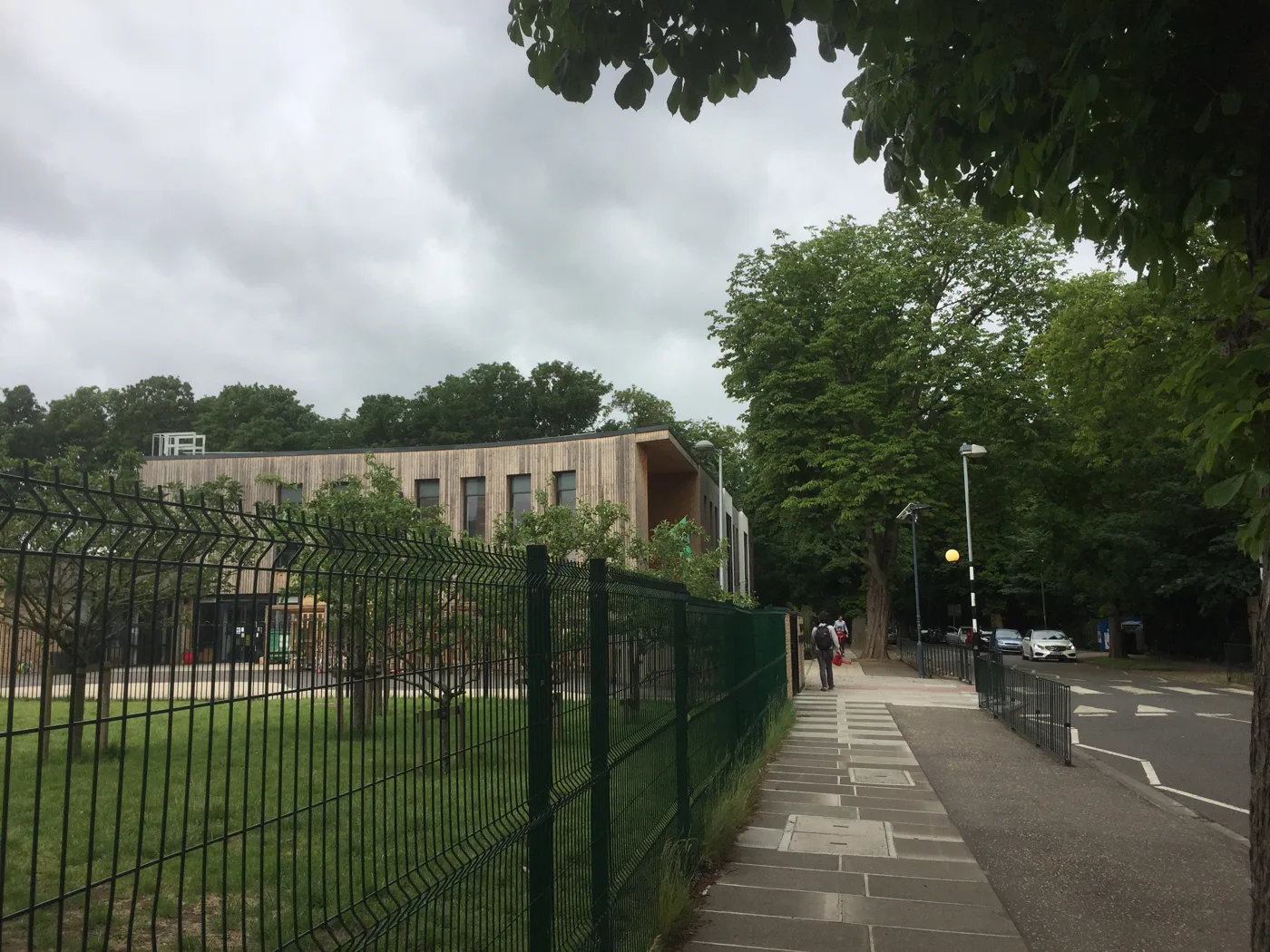

Hampton Wick Infant and Nursery School would close in August 2027 and St John the Baptist would become a church primary. Councillors vote on 12 November.
Hampton Wick’s infant school and its neighbouring junior school should become one Church of England primary school from September 2027, Richmond Council officers have recommended.
Hampton Wick Infant and Nursery School would close on 31 August 2027. St John the Baptist CE Junior School would then take children from nursery age to 11.
The Education and Children’s Services Committee will be asked on Thursday 12 November to publish formal notices of the plan. The recommendation is in the committee report. The same report recommends closing Kew Riverside Primary School.
Why the two schools would merge
Fewer children are being born in the area. The council’s papers say the Teddington and Hampton Wick planning area expects the borough’s largest fall in the birth rate, 27.89% between 2025/26 and 2031/32.
The figures, from Appendix 2, show both schools shrinking:
| Hampton Wick Infant | St John the Baptist Junior | |
|---|---|---|
| Room for | 232 pupils | 240 pupils |
| On roll, 2025/26 | 128 | 212 |
| Forecast, 2031/32 | 119 | 198 |
The new school would admit 30 children a year, one class. The papers say that is below current demand but gives the school “the optimum operational capacity”. Both schools now plan for intakes of 60.
The infant school is forecast to end this financial year with a deficit of about £163,000. The junior school has no deficit, but relies on rent from Malden Oaks School, which uses its spare rooms. Officers’ modelling shows a merged school on St John’s finances could balance its budget over the medium term.
Any deficit left at Hampton Wick Infant when it closes would pass to the council, not the new school.
The church question
This was the main dispute in the consultation. The infant school is a community school with no religious character. St John the Baptist is a voluntary aided Church of England school.
The council’s consultation summary says opinions were “heavily divided”:
- Families wanting a community school said the area is largely non-religious. They worried a church school could deter some families or affect who is hired.
- Families wanting a church school valued St John’s pastoral care, its Christian ethos and its links with local churches.
- Some suggested a voluntary controlled school as a middle way. Officers say no “compelling argument” was made for it.
Officers recommend the church model. Their report on the issues gives three reasons:
- Government guidance asks councils to keep the balance of faith places in an area.
- A community school would mean losing St John’s 240 Church of England places. Officers say that risks a legal challenge from the London Diocesan Board for Schools.
- The diocese and St John’s governors have confirmed that faith would play no part in admissions. The new school would follow the community schools admissions policy.
The National Secular Society wrote to object to the church model. It argued that the consultation documents were misleading on governance, employment and admissions. The council says it has answered those points.
Officers also propose that the new school’s governing body include members from both existing schools.
Which building
That is not decided. Neither building is big enough for all the pupils at first, so the school would run across both sites. It would move to one site “at the earliest opportunity”.
Parents raised the outdoor space at each school. Hampton Wick Infant has a woodland area called “the Wilderness”. St John’s has a sports field. A feasibility study of both sites has been commissioned.
The land is split. The council owns all of the infant school site. The London Diocesan Board for Schools owns about 55% of St John’s site, including the land under the building.
What it means for you
- Every pupil at both schools would be guaranteed a place at the new primary.
- Staff at both schools face a formal staffing consultation. Officers say the aim is to avoid redundancies, but there would be fewer leadership and office roles.
- Nothing is final. If the committee agrees on 12 November, a representation period of at least four weeks follows. A final decision would come in April 2027.
- The meeting starts at 7pm. The agenda and papers are online, and meetings are webcast at richmond.public-i.tv.
- Term dates for the borough’s schools are on our school term dates page.
The main report describes St John’s extended age range as 3 to 11. One appendix gives it as 4 to 11.
We will report the committee’s decision after the meeting on 12 November.
Have your say