
Richmond's 43.4% of GCSE entries at grade 7 or above beats London's 30.2%. What the borough ranking measures, and what each school published.
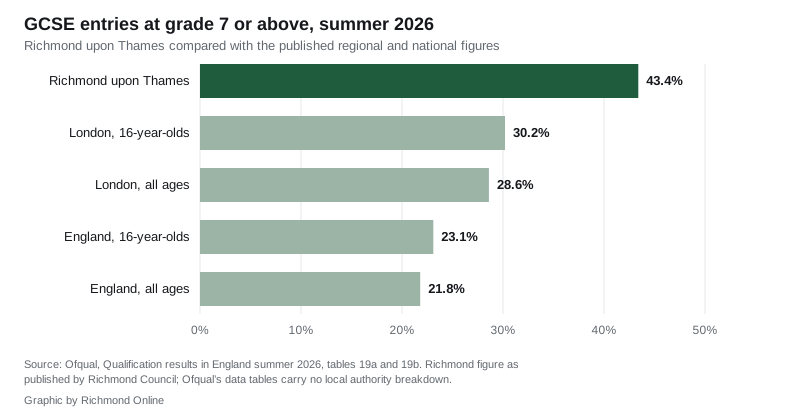
Richmond Council says the borough has been ranked the second best-performing local authority in England for GCSEs this summer, with 43.4% of entries awarded grade 7 or above, up from 43.2% in 2025. The figure comes from the council’s results-day statement, published on 20 August and attributed to data from Ofqual.
The claim stands up against every national benchmark that can actually be checked. It is also worth understanding what the borough number counts, because it is not quite “how Richmond’s children did”.
How 43.4% compares
Ofqual’s official statistics for summer 2026 publish the share of GCSE entries at grade 7 or above for England and for every region, on two bases. Table 19a covers entries at all ages. Table 19b strips out the college resit entries and covers 16-year-olds only, which lifts every region by roughly a point and a half at the top grades.
| Group, summer 2026 | Grade 7 or above | Grade 4 or above |
|---|---|---|
| Richmond upon Thames (council figure) | 43.4% | not published |
| London, 16-year-olds | 30.2% | 75.5% |
| London, all ages | 28.6% | 71.7% |
| England, 16-year-olds | 23.1% | 70.7% |
| England, all ages | 21.8% | 67.0% |
Richmond clears all four. That matters, because councils routinely compare themselves with the all-ages England figure, which is the softest benchmark on the board: it is dragged down by adults and college students resitting English and maths. Richmond’s lead survives the harder test.
What the borough figure actually measures
Two things are worth knowing before the number gets repeated.
Ofqual publishes no local authority breakdown in its data tables. The borough figure and the England ranking come from Ofqual’s interactive map of GCSE outcomes by area, which is a separate tool. The downloadable tables stop at region.
Grades are assigned to an area by the exam centre, not by where the pupil lives. Ofqual states it plainly on the map. “All grades have been assigned to geographical areas based on the postcodes recorded for exam centres in the National Centre Number (NCN) register.” So the borough score is a score for the schools inside the boundary, whoever they teach.
That is not a small distinction here. Ofqual’s table 20 shows how far centre types diverge nationally:
- grammar schools: 63.2% of entries at grade 7 or above
- independent and private schools: 47.1%
- local authority maintained comprehensives: 20.1%
- academies: 19.7%
- all state-funded schools combined: 20.6%
The Department for Education’s register of schools lists 11 open mainstream state secondaries in Richmond upon Thames, alongside nine independent senior schools with borough postcodes, among them St Paul’s in Barnes, Hampton School, Lady Eleanor Holles and The Harrodian. Ofqual does not publish a split, so nobody can say from the public data how much each group contributed.
What Richmond’s own schools published
Six of the borough’s eleven mainstream state secondaries had put 2026 figures on their own websites by 24 August. Four of them reported a higher share of top grades than the borough as a whole.
- Orleans Park School, Twickenham: 59% of all grades at 9-7, 39% at 9 or 8, 19% at grade 9, and 93% at grade 4 or above.
- Waldegrave School, Twickenham: 51% of all grades at grade 7 or above, with 86% of students getting at least five GCSEs including English and maths at grade 4 or above.
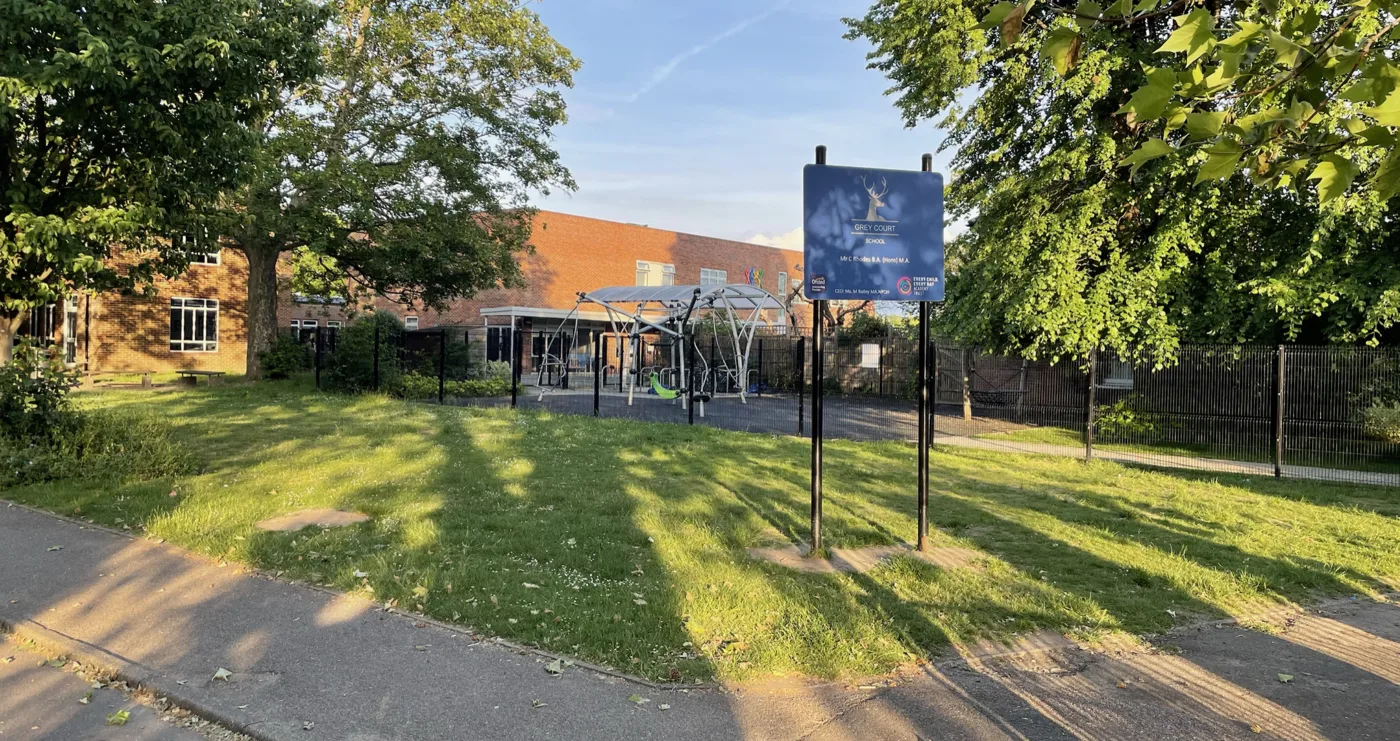
- Grey Court School, Ham: 49% of grades at 9-7 and 29% at 8 or 9, which the school calls its best results ever. 95% of students achieved 9-4 including English and maths.
- St Richard Reynolds Catholic High School, Twickenham: 47% of all grades at 7 or above and 14% at grade 9, described as the best in the school’s history. 89% passed maths and English, 83% at grade 5 or above in both.
- Teddington School: 36% of students achieving grades 7-9 and 69% at 5-9, with 85% of maths grades and 84% of English students at grade 4 or above.
- Hampton High: over 50% of pupils with at least five passes at grade 5 or above, and 30% with at least five at grade 6 or above.
Christ’s School in Richmond published a press release without headline percentages, in which senior deputy headteacher Alice Buchanan said two-thirds of students secured strong core passes.
These figures are not interchangeable, and they are not a league table. Orleans Park, Waldegrave, Grey Court and St Richard Reynolds report the share of grades, which is the basis Ofqual uses. Teddington and Hampton High report the share of students clearing a threshold. That is a different measure entirely. School figures are also unvalidated and pre-appeal, and each covers one cohort in one year.
What it means for you
If a grade looks wrong, there are two national services and both close on the same day.
- Clerical re-check, deadline 24 September 2026, completed within 10 calendar days. It checks the paper was marked and totalled correctly.
- Review of marking, deadline 24 September 2026, completed within 20 calendar days. A senior examiner reviews the marking.
- The priority review that ran on 20 August covered A level, AS and Level 3 vocational qualifications only. It does not apply to GCSEs.
- Requests go through the school’s exams officer, not the family, and need the student’s written consent. There is no grade protection: a grade can go down as well as up. The deadlines are on JCQ’s post-results page.
Autumn resits in English and maths are the other route. The Pearson Edexcel November 2026 timetable sets these dates, all morning sittings:
- English Language: Tuesday 3 and Thursday 5 November
- Maths: Wednesday 4, Friday 6 and Monday 9 November
Entries go through the school or college, not the family.
The council is running a Summer Support helpline on 07864 612857 through Achieving for Children for students who did not get the grades they wanted, and points students to the free anonymous counselling service Kooth. For apprenticeships and training routes, the council’s employment service is Richmond Work Match, which moved 337 residents into sustainable jobs in 2025/26.
Sources
- Richmond Council, “Richmond students celebrate GCSE success as borough ranks second in England”, 20 August 2026
- Ofqual, Qualification results in England: summer 2026, data tables 19a, 19b and 20
- Ofqual Analytics, GCSE grade outcomes by administrative areas in England
- Get Information About Schools, Department for Education
- JCQ, post-results services, summer 2026
Have your say