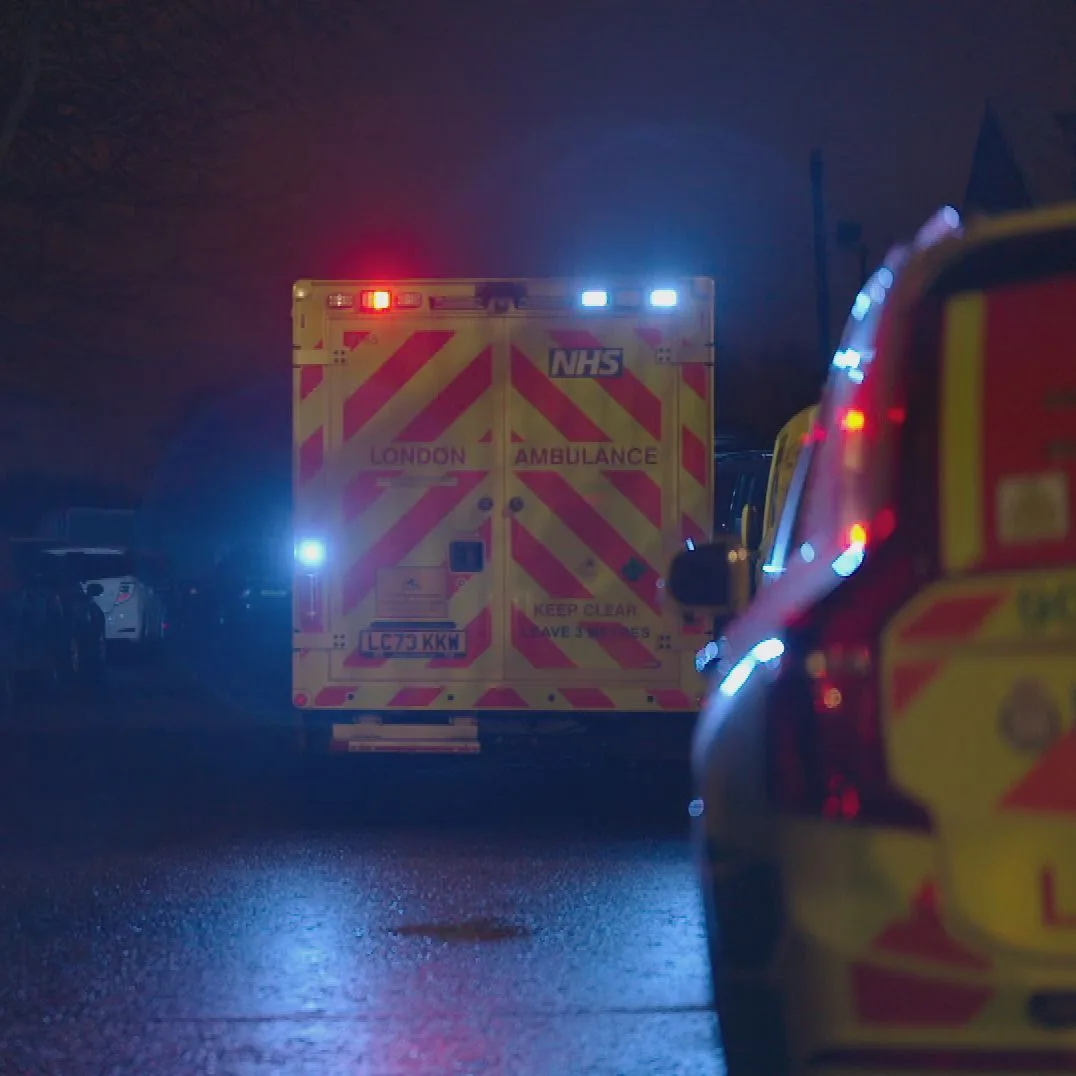

London Ambulance Service has declared a critical incident after more than 7,000 calls a day for three days. Call 999 only in a life-threatening emergency.
London Ambulance Service, which answers 999 calls across Richmond upon Thames and the rest of the capital, has declared a critical incident after more than 7,000 calls a day for three days in a row.
The service took 7,326 calls on Monday, 7,366 on Tuesday and 7,369 on Wednesday. It says that is higher than on most New Year’s Eves, and around 500 more 999 calls a day than last week. On a typically busy day, call handlers take around 5,500.
Overview
- What: a critical incident, declared by London Ambulance Service on 19 November 2026 because of sustained high demand.
- Calls: 7,326 on Monday, 7,366 on Tuesday and 7,369 on Wednesday, against around 5,500 on a typically busy day.
- What to do: call 999 only for a serious or life-threatening emergency. For anything less urgent, use NHS 111, a GP or a local pharmacy.
Breathing problems up almost 20 per cent
Life-threatening emergencies involving breathing problems are up by almost 20 per cent so far this November, compared with the same period last year, the service says.
Category 1 incidents, the life or death emergencies that include cardiac arrest, are 10 per cent higher overall than at this time last year. Demand has continued to rise in recent weeks.
Craig Harman, the service’s Chief Operating Officer, said: “The number of calls has remained very high for several days, so we have declared a critical incident to take extra steps to reach patients who need us most urgently.
“Colder weather can have a serious impact on people’s health, particularly older people, young children and those with existing health conditions. We are already seeing very high demand this winter, including an early rise in respiratory and viral infections.”
What a critical incident means
A critical incident means pressure or disruption is affecting vital services or putting patients and staff at risk. Declaring one lets the service take extra steps and ask for more help where it is needed, to keep people safe and get services back to normal.
“We are increasing the number of clinicians caring for patients over the phone and working closely with hospitals to speed up handovers,” Mr Harman said. “This helps us get crews back out to patients more quickly and provide appropriate care over the phone when an ambulance isn’t needed.
“Our winter plan also includes putting more crews on the road and in our control rooms.”
The service says it has been working with partners across London for months to prepare for winter. Its winter plan includes:
- extra ambulances on the road at times of peak demand;
- more clinicians caring for patients over the phone, so some patients get the care they need without going to a busy emergency department;
- trusted AI tools to help record patient notes;
- working closely with hospitals on faster patient handovers at A&E.
Who to call
People should still call 999 in a life-threatening emergency. For less urgent health concerns, the service asks people to contact NHS 111, a GP or a local pharmacy instead, so ambulances are free for the sickest patients.
It also asks anyone eligible for a flu vaccination to take it up as soon as possible, calling it one of the best ways to protect vulnerable people this winter.
“Please look after yourselves and those around you, particularly anyone who may be more vulnerable to the colder weather,” Mr Harman said. “Help us by only calling 999 if it is a life-threatening emergency.”
The service’s announcement is on the London Ambulance Service newsroom.
Source: London Ambulance Service press office.
Have your say