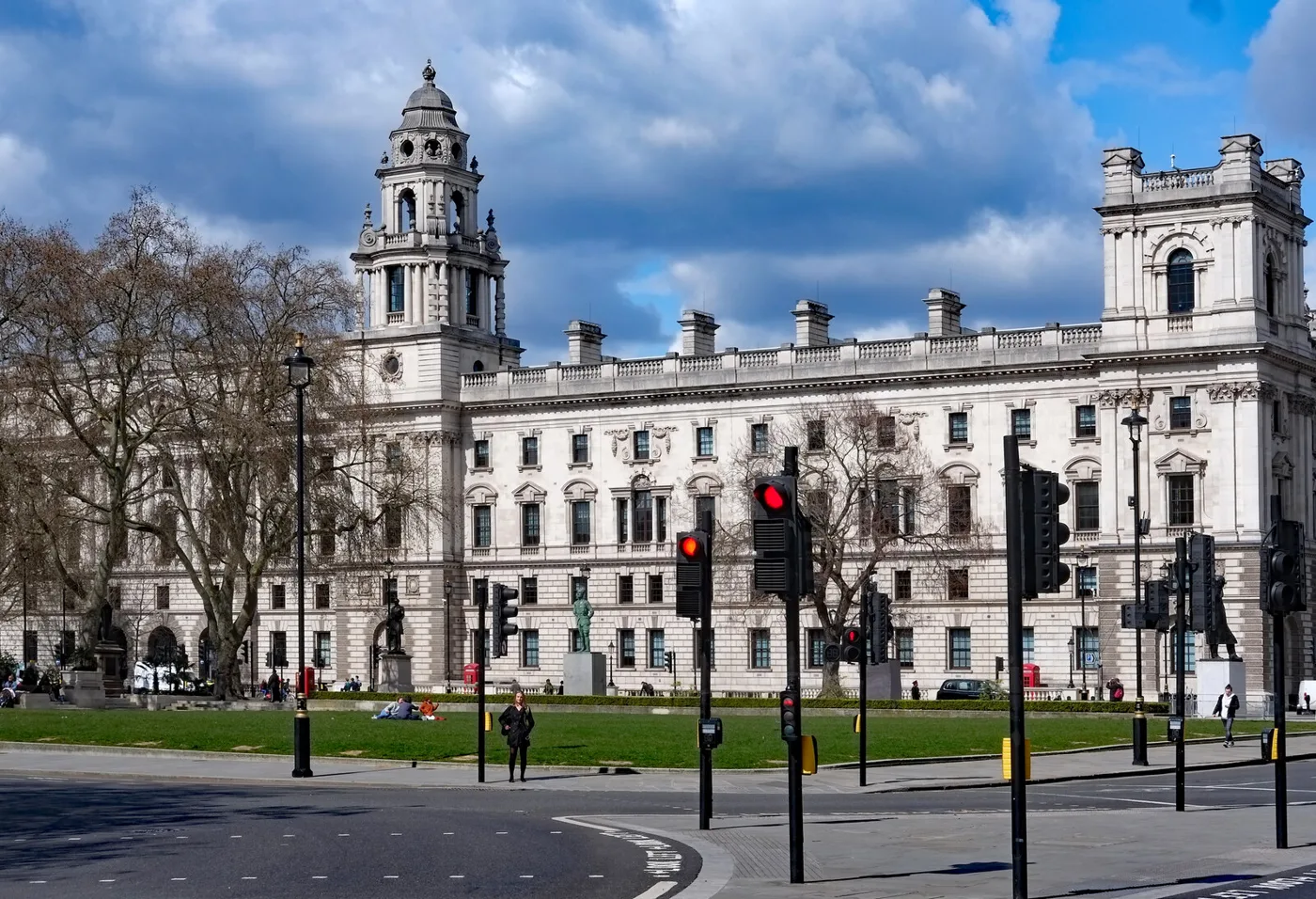

The government has kept the £2m threshold and the £35,000 household income limit for deferring the surcharge. Richmond Council wrote to ministers on 5 November to object.
The government will press ahead with its “mansion tax” on homes worth £2 million or more without the changes Richmond Council asked for. The council’s leader wrote to ministers on Thursday 5 November to say so.
The surcharge’s formal name is the High Value Council Tax Surcharge. The government published its response to the consultation in October. It keeps the £2 million threshold, and it keeps the income and savings limits for putting off payment that the council had called too low for London.
Cllr Gareth Roberts, the leader of the council, said in his letter to ministers that the government “has retained the core features of its original proposal”. He called the response a “deep disappointment”.
What the government decided
The response sets out what happens next. These points are all from the government’s own document:
- The £2 million threshold stays. The charge applies to residential property in England worth £2 million or more.
- You can defer the charge if your household income is £35,000 or less, or your savings are £16,000 or less, or someone in the household meets disability criteria.
- A deferred charge is paid when the home changes hands, or earlier if the owner chooses. The interest rate on deferred sums has not been set; it will come in regulations.
- The Valuation Office will publish a draft list of properties in scope in autumn 2027.
- Owners get eight months from the start of the surcharge to challenge their band. The Valuation Office must answer within four months, and owners can then appeal to the Valuation Tribunal.
- Councils can start sending bills from March 2028.
- Revaluations every five years.
The government received 424 responses: 243 from members of the public, 25 from councils and 156 from industry bodies, charities and others. It says there was “general support for the proposals”.
Why the council objects
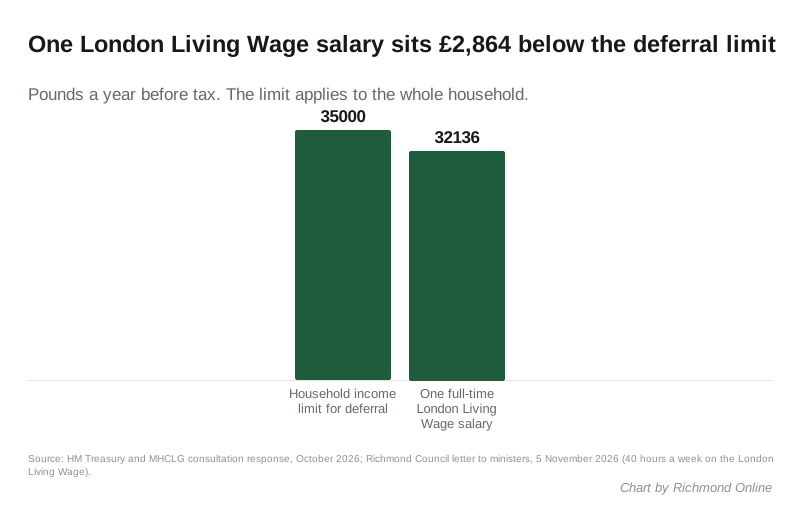
The council’s main complaint is the £35,000 deferral limit. That figure covers the whole household, and it is the same everywhere in England.
Cllr Roberts set it against the London Living Wage. Someone working 40 hours a week on it would earn £32,136 a year before tax, he wrote. That is only £2,864 below the limit, for an entire household.
The letter makes four other points:
- Deferral is not relief. For people who defer for years, it “would simply mean accumulating a growing debt against their home”.
- It is not a local tax. Councils will not set the threshold, the rates or the rules, and the government has not said how the money will benefit the places it comes from.
- Older and disabled residents. Many Richmond owners have lived in the same home for decades, and a rise in its value does not give them a greater ability to pay.
- Some things did improve. The council welcomed the promises on data sharing, guidance, funding for councils to run the scheme, and clearer rules on liability and appeals.
In the council’s statement on Thursday, Cllr Roberts said the 28-page response “mentions London just twice”. We checked: apart from the Treasury’s postal address on the back page, it does.
How many Richmond homes are affected
The council estimates that about 4,900 homes in the borough are worth £2 million or more, as we reported in September. In August, Richmond, Kensington and Chelsea, Westminster and Wandsworth said their residents could pay around £275 million under the scheme. That is more than half of all the money the policy is expected to raise across England.
The charge runs in four bands, from £2,500 a year for homes worth £2 million to £2.5 million, up to £7,500 a year above £5 million. Our earlier report on the threshold sets out every band.
What it means for you
- If your home might be worth £2 million or more, watch for the Valuation Office’s draft list in autumn 2027. You will have eight months from the start of the surcharge to challenge your band.
- If your household earns £35,000 or less, or has savings of £16,000 or less, you should be able to defer the charge until the home is sold or passes on. The interest rate is still to be set.
- The surcharge is on top of your normal council tax. Your ordinary band does not change. Our council tax bands page has this year’s charges.
- Tenants do not pay it. The owner is liable.
The law still has to pass. The government says it will legislate in the Finance Bill 2026 and set out the detail in regulations after that.
Sources
- High Value Council Tax Surcharge: summary of responses and government response, HM Treasury and MHCLG, October 2026
- Letter from Cllr Gareth Roberts to ministers, Richmond Council, 5 November 2026
- Ministers ignoring residents’ Mansion Tax concerns, Richmond Council, 5 November 2026
- More than half of ‘mansion tax’ total will come from just four London boroughs, Richmond Council, 6 August 2026
Have your say